
Tuya Smart
Why Bluetooth Low Energy Fits Battery-Powered Smart Locks
Bluetooth Low Energy supports short-range data exchange while helping portable products manage limited battery capacity.
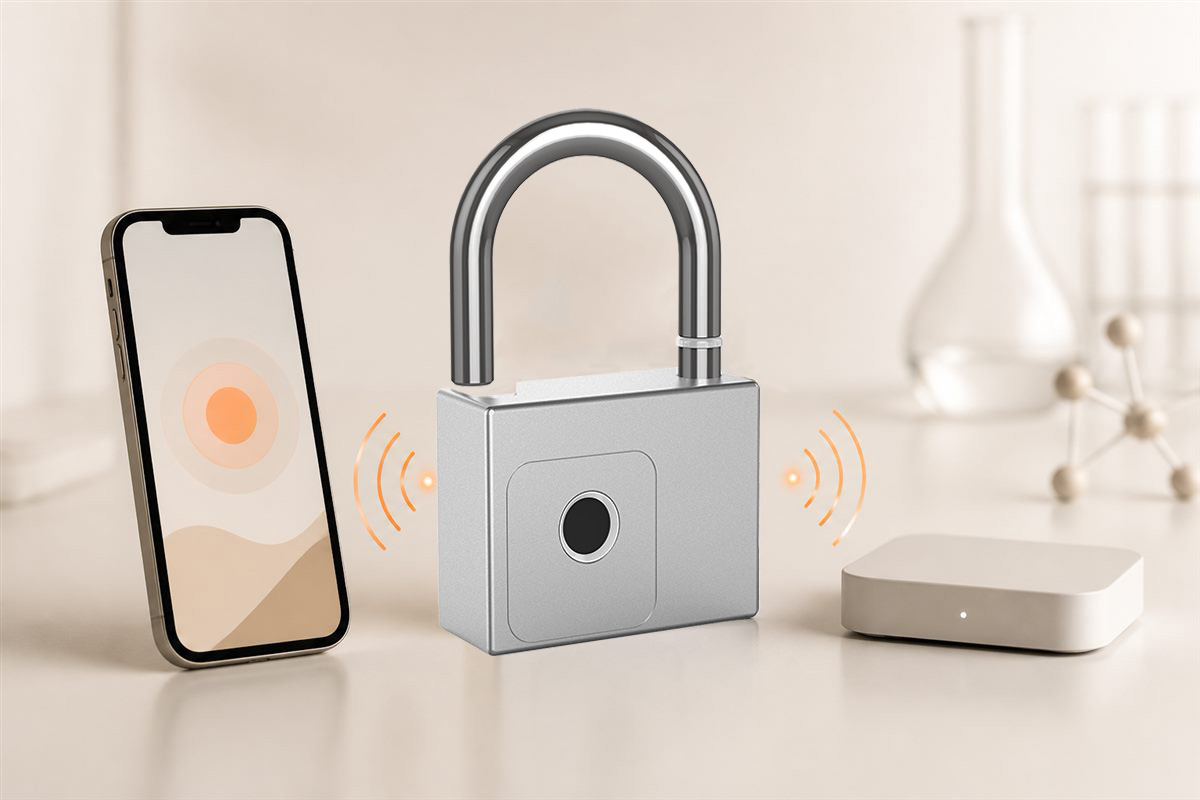
DIRECT ANSWER
Bluetooth Low Energy is designed for efficient short-range communication, making it appropriate for battery-powered locks that connect intermittently rather than stream data continuously.
A practical connectivity pattern
The lock can wake for a nearby interaction, exchange small amounts of data and return to a lower-power state. Firmware design and user behavior still determine actual battery life.
A gateway changes the connection pattern because the lock may communicate with a nearby bridge to reach cloud services.
Security is implementation-dependent
The Bluetooth specification includes link-layer encryption and authentication mechanisms, but finished-product security also depends on pairing, keys, firmware, app accounts and updates.
Explore related BioLock locks
Key takeaways
- Efficient short-range communication
- Battery life depends on the whole design
- Security extends beyond the radio standard
Authoritative references
These primary sources support the general technical explanation. BioLock model features remain configuration-specific.
Editorial note: This is original BioLock educational content. Company-event articles use BioLock's own archive and photographs; technical articles summarize public primary references without reproducing protected text.