
Fingerprint Technology
Capacitive vs Optical Fingerprint Sensors for Smart Padlocks
Why compact battery-powered padlocks commonly use capacitive sensing rather than a camera-style optical reader.
DIRECT ANSWER
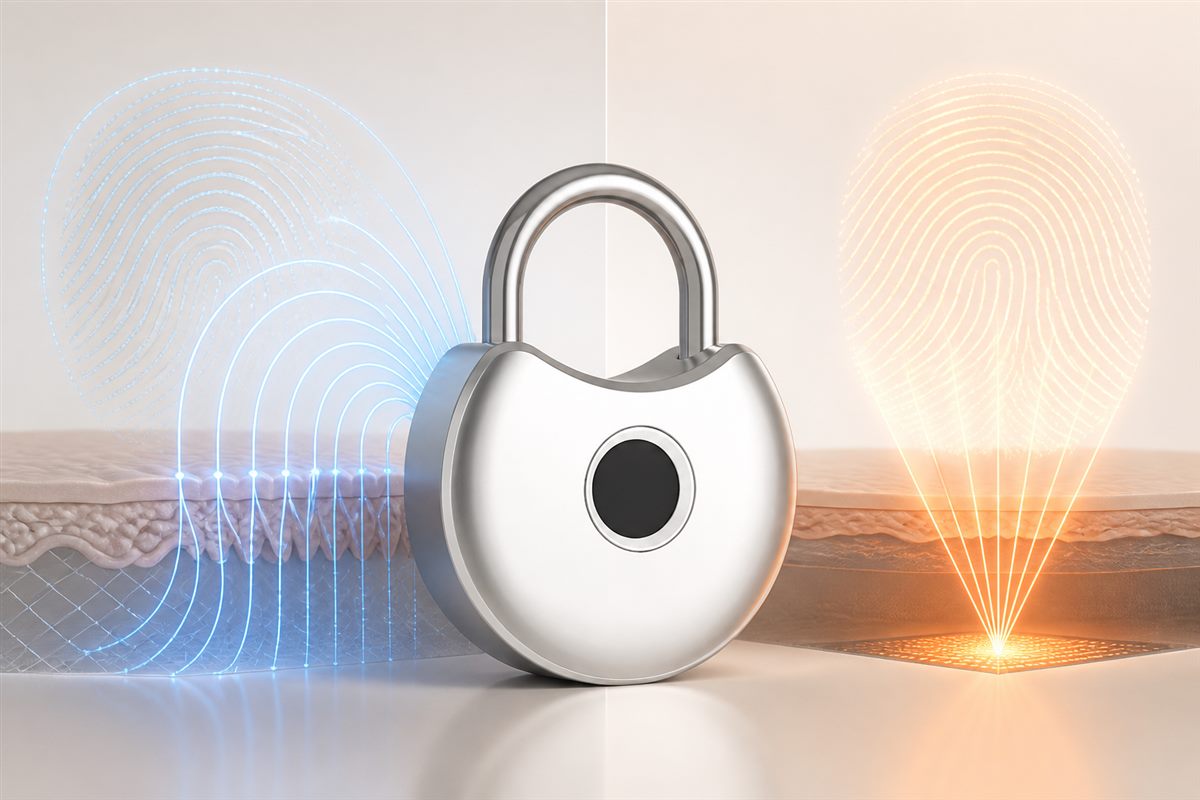
Capacitive sensors are compact and energy-efficient, while optical sensors capture a visible ridge image; portable locks commonly favor capacitive designs for size and power reasons.
How the sensing methods differ
An optical reader illuminates and images a fingertip. A capacitive reader measures electrical differences created by ridges and valleys touching an array.
Neither method guarantees perfect recognition: sensor construction, algorithms, enclosure design and enrollment all matter.
Questions for buyers
Ask about sensor area, enrollment workflow, capacity, response behavior and field testing. Evaluate the finished lock rather than selecting on sensor terminology alone.
Explore related BioLock locks
Key takeaways
- Capacitive sensing suits compact products
- Algorithms and enclosure matter
- Test the finished product
Authoritative references
These primary sources support the general technical explanation. BioLock model features remain configuration-specific.
Editorial note: This is original BioLock educational content. Company-event articles use BioLock's own archive and photographs; technical articles summarize public primary references without reproducing protected text.