
Fingerprint Technology
How Semiconductor Fingerprint Recognition Works in a Padlock
A plain-English explanation of sensing, template creation and local matching in a compact biometric padlock.
DIRECT ANSWER
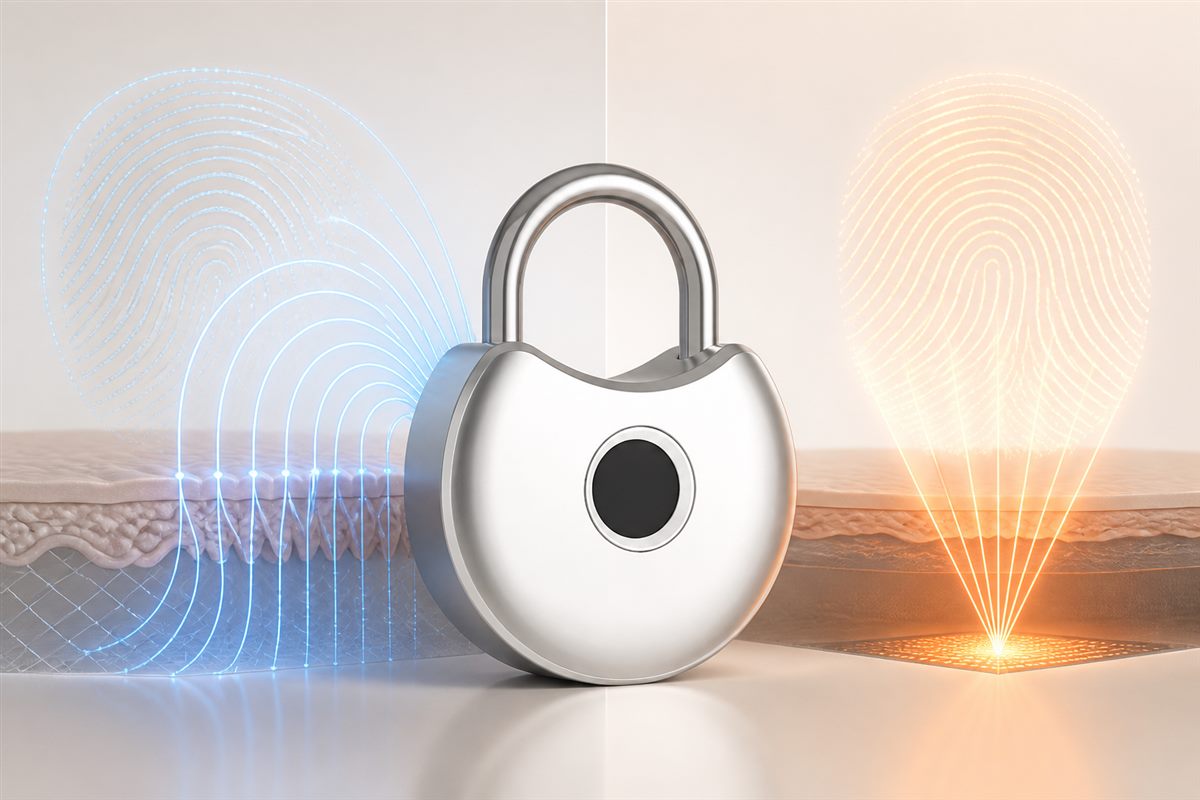
A semiconductor fingerprint sensor measures ridge-and-valley information, converts useful features into a template and compares a new scan with authorized templates before unlocking.
From touch to template
The sensor collects a signal from the contacting fingertip. Matching software extracts features such as ridge endings and bifurcations, concepts widely used in fingerprint analysis, instead of treating the scan like a normal photograph.
Several enrollment touches help capture useful areas from natural angles.
What affects recognition
Water, dirt, very dry skin, shallow contact and cuts can hide ridge detail. Clean the sensor, place the finger flat and enroll a backup finger for more reliable daily use.
Explore related BioLock locks
Key takeaways
- Templates represent fingerprint features
- Multiple enrollment touches improve coverage
- Clean contact supports recognition
Authoritative references
These primary sources support the general technical explanation. BioLock model features remain configuration-specific.
Editorial note: This is original BioLock educational content. Company-event articles use BioLock's own archive and photographs; technical articles summarize public primary references without reproducing protected text.